MUSLIM EATING HABITS!
An Ex-Muslim Examines the Deeply Problematic Concept of Halal
DEC 21, 2025 1:00 PM
BY SALEEM SMITH
Many concerning issues arise when considering the Islamic concept of halal. Halal is an Arabic term meaning permissible. Therefore, halal refers to practices that Muslims are allowed to partake in, according to Islamic theology and law. Conversely, haram is the Islamic term referring to that which is forbidden to Muslims.
Many activities considered to be halal are deemed to be illegal in secular societies. These crimes include, but are not limited to, the crimes of slavery, sex slavery, wife beating, the killing of Muslim apostates, and pedophilia. For a more thorough examination of crimes considered to be permissible in Islam, see my previous six-part series of articles found here: Part 1, Part 2, Part 3, Part 4, Part 5, and Part 6. Before addressing the evils that are undeniably part and parcel of Islamic theology and law, let us first briefly consider the negative aspects of halal as they relate to the food industry.
In non-Islamic lands, we are seeing a notable increase in Muslim-owned grocery stores, restaurants and specialty butcheries, etc. The cruelty of slaughtering animals in accordance with halal standards is well documented, along with the fact that Muslim-owned meat processing plants tend to prioritize the hiring of Muslim immigrants, so as to increase the Muslim population within non-Islamic lands. See graphic video here documenting halal slaughterhouse practices.
In short, halal slaughter traditionally requires an animal to be killed through a specific method (the slitting of the animal’s throat while Islamic prayers are recited) that typically does not involve the pre-stunning of the animal. Critics argue that slaughter without stunning is inhumane, raising concerns among animal welfare advocates. Furthermore, supporting halal butcheries and Islamic-owned businesses inevitably leads to the further spread of certain troublesome Islamic practices such as those mentioned above.
The remainder of this article will examine the concept of halal being applied more broadly, and examine why this reality is highly problematic. It is highly problematic if non-Islamic societies permit certain troublesome Islamic behaviors to be performed — behaviors such as child marriage, multiple marriages, gender-bias inheritance rules, the jihad imperative, etc. Numerous severe legal and social problems inevitably manifest if these behaviors are allowed to occur.
A good way of further understanding the concept of halal is to consider the many personal realms of life that it regulates. Arguably, the most problematic aspect of halal is the category of personal conduct. Tragically, the concept of halal gives Muslims permission to commit crimes that are considered by the civilized world to be grossly uncivilized.
Speaking as a former Muslim living with the realities of Islam’s formal and informal death penalty for apostasy, my conscience will not permit me to purchase halal products. After all, how could ex-Muslims such as I be expecting to support a religious system that calls for our deaths for no other “crime” than simply choosing to leave it? In truth, all persons of conscience ought to boycott all halal products for the reasons put forth in this article.
Some people may jump to the conclusion that boycotting all halal products is an extreme and cruel proposition. I dare to disagree, and insist that it is both reasonable and justifiable to do so. Islam is undoubtedly philosophically and morally rotten to the core, and the sooner that Muslims walk away from it, the better off we all will be.
Certainly there are peaceful Muslims who do not act upon Islam’s many inhumane teachings. Yet sadly a large number of them will do so, because the Islamic texts give them permission to do so. Therein lies the rub.
When examining regions of the non-Islamic world where Muslims are large in number, we observe that Muslims tend to exploit the modern welfare state and cause all manner of social and legal problems in their quest to overtake these societies and turn them into Islamic lands governed by the Sharia.
The no-go zones throughout Europe that have evolved over recent decades should be a wakeup call for all free nations. Sweden, France, Germany, the UK and others are now literally teetering on the brink of social and financial collapse due to the influx of Muslim migrants and other mismanagements.
Here are statistics from 2011 on no-go zones in Europe. The situation has gotten much worse since then. If these trends are not reversed the future will not lead to peaceful and positive outcomes.
What were the diet and eating habits of the
Prophet , and his Companions?
Answer : Praises be to Allaah. The Prophet’s guidance with regard to food is perfect guidance.
Correction: MO-HAM-MAD's guidance to food is perfect ignorance.
It was described by Ibn al-Qayyim as follows:
When he put his hand in the food, he would say, “Bismillaah (in the Name of Allaah), and he told people to say this when eating. He said, “When any one of you eats, let him mention the name of Allaah. If he forgets to mention the name of Allaah at the beginning, let him say Bismillaahi fi awwalihi wa aakhirihi (in the name of Allaah at its beginning and at its end).” Saheeh hadeeth, narrated by al-Tirmidhi (1859) and Abu Dawood (3767).
Correction: Modern civilized peoples use eating utensils.
The correct view is that it is obligatory to mention the name of Allaah (say Bismillaah) when eating. The ahaadeeth which state this are saheeh and are clear, with no contradictions in them.
Correction: Christians will bless the food in the name of Jesus Christ. John 14:13-14.
When he raised the food to his mouth, he would say, “Al-hamdu Lillaahi hamdan katheeran tayyiban mubaarakan fihi ghayri makfiyyin wa laa muwadda’ wa laa mustaghni ‘anhu Rabbanaa ‘azza wa jall (Allaah be praised with an abundant, beautiful, blessed praise. He is the One Who is Sufficient, Who feeds and is never fed, The One Who is longed for, along with that which is with Him, and the One Who is needed. He is Our Lord, may He be glorified). Narrated by al-Bukhaari (5142).
Correction: All praise, honor, and glory belong to the Father and the Son in the power of the Holy Spirit. Revelation 5:13.
He never criticized food at all. If he liked it, he would eat it, and if he did not like it, he would leave it and not say anything. Narrated by al-Bukhaari (3370) and Muslim (2064).
Note: Maybe MO-HAM-MAD forgot to say "Allaah bless this camel meat."
Or he would say, “I do not feel like eating this.” Narrated by al-Bukhaari (5076) and Muslim (1946).
Sometimes he would praise the food, as when he asked his family for food, and they said, “We have nothing but vinegar.” He asked for it and started to eat it, saying, “What a good food is vinegar.” Narrated by Muslim (2052)
Note: MO-HAM-MAD had no civilized manners since he ate and spoke at the same time.
He used to talk whilst he was eating, as is seen from the report quoted above about vinegar.
And he said to his step-son ‘Umar ibn Abi Salamah when he was eating with him: “Say Bismillaah and eat from that which is in front of you in the dish*.” Narrated by al-Bukhaari (5061) and Muslim (2022). [* At the time of the Prophet (peace and blessings of Allaah be upon him), people used to eat together from one dish, and children would sometimes forget the correct etiquette. - Translator]
Note: Arabs were and are a diseased people due to their communal eating habits.
He would repeatedly urge his guests to eat, as generous hosts do, and as is seen in the hadeeth of Abu Hurayrah, narrated by al-Bukhaari, about the story of drinking milk, where he repeatedly said to him, “Drink!” and he kept telling him to drink until he (the guest) said, “By the One Who sent you with the truth, I have no more room for it!” Narrated by al-Bukhaari (6087).
Note: MO-HAM-MAD wanted Muslims to over dose on goat's milk.
When he ate with others, he would not leave until he had made du’aa’ for them. He made du’aa in the house of ‘Abd-Allaah ibn Bisr, and said: “O Allaah, bless for them that which You have provided for them, forgive them and have mercy on them.” Narrated by Muslim (2042).
He commanded people to eat with their right hands and forbade them to eat with their left hands. He said, “The Shaytaan eats with his left hand and drinks with his left hand.” Narrated by Muslim (2020). This implies that eating with the left hand is haraam, and this is the correct view, because the one who eats with his left hand is either a shaytaan (a devil), or he is imitating the Shaytaan.
Note: Muslims will consider you a devil if you eat with your left hand.
It was also reported in a saheeh hadeeth that he told a man who was eating with his left hand in his presence, “Eat with your right hand!” The man said, “I cannot.” He said, “May you never be able to!” – and the man never lifted his right hand to his mouth after that. Narrated by Muslim (2021). If it was permissible (to eat with the left hand), he would not have prayed against him for doing so. It was the man’s stubborn arrogance that made him refuse to obey the command, and this is the utmost disobedience which deserved this prayer against him.
Note: Muslims will starve instead of using their left hand to eat with.
He commanded those who complained that they never felt full to eat together and not separately, and to mention the name of Allaah (say Bismillaah) over the food so that He might bless it for them.” Narrated by Abu Dawood (3764) and Ibn Maajah (3286).
(See Zaad al-Ma’aad, 2/397-406)
It was also reported that he said, “I do not eat reclining.” Narrated by al-Bukhaari, 5083.
He used to eat using the first three fingers (of his right hand), which is the best way of eating.
Note: If you don't have the first three fingers on your right hand then you will starve in a Muslim culture.
See: Zaad al-Ma’aad, 220-222. And Allaah knows best.
The Prophet’s guidance regarding diet:
The Prophet (peace and blessings of Allaah be upon him) used to know what he was eating. He used to eat what was good for him.
Note: Such as?
He used to eat enough to keep him going, but no so much as to make him fat. Ibn ‘Umar narrated that the Prophet (peace and blessings of Allaah be upon him) said: “The believer eats in one stomach whilst the kaafir eats in seven.” Narrated by al-Bukhaari (5081) and Muslim (2060).
He taught his ummah something to protect them from diseases caused by eating and drinking. He said: “The son of Adam does not fill any vessel worse than his stomach. It is sufficient for the son of Adam to eat a few mouthfuls, to keep him going. If he must do that (fill his stomach), then let him fill one third with food, one third with drink and one third with air.” Narrated by al-Tirmidhi (1381), Ibn Maajah (3349); classed as saheeh by al-Albaani in al-Silsilah al-Saheehah (2265).
Note: MO-HAM-MAD wants people to eat air one third of the time.
And Allaah knows best.
Correction: Allaah knows nothing.
Prohibited food in the Qur'an
Al-Baqara (The Cow) (Arabic) - Recite
2:173 He hath only forbidden you dead meat, and blood, and the flesh of swine, and that on which any other name hath been invoked besides that of Allah. But if one is forced by necessity, without wilful disobedience, nor transgressing due limits,- then is he guiltless. For Allah is Oft-forgiving Most Merciful.
Note: MO-HAM-MAD taught Muslims not to eat pork.
Al-Ma'idah (The Table Spread) (Arabic) - Recite
5:3 Forbidden to you (for food) are: dead meat, blood, the flesh of swine, and that on which hath been invoked the name of other than Allah. that which hath been killed by strangling, or by a violent blow, or by a headlong fall, or by being gored to death; that which hath been (partly) eaten by a wild animal; unless ye are able to slaughter it (in due form); that which is sacrificed on stone (altars); (forbidden) also is the division (of meat) by raffling with arrows: that is impiety. This day have those who reject faith given up all hope of your religion: yet fear them not but fear Me. This day have I perfected your religion for you, completed My favour upon you, and have chosen for you Islam as your religion. But if any is forced by hunger, with no inclination to transgression, Allah is indeed Oft-forgiving, Most Merciful.
Note: MO-HAM-MAD taught Muslims not to hunt for food.
Al-An'am (The Cattle) (Arabic) - Recite
6:119 Why should ye not eat of (meats) on which Allah's name hath been pronounced, when He hath explained to you in detail what is forbidden to you - except under compulsion of necessity? But many do mislead (men) by their appetites unchecked by knowledge. Thy Lord knoweth best those who transgress.
Note: MO-HAM-MAD taught Muslims not to eat food blessed in the name of Jesus Christ.
Al-An'am (The Cattle) (Arabic) - Recite
6:121 Eat not of (meats) on which Allah's name hath not been pronounced: That would be impiety. But the evil ones ever inspire their friends to contend with you if ye were to obey them, ye would indeed be Pagans.
Al-An'am (The Cattle) (Arabic) - Recite
6:121 Eat not of (meats) on which Allah's name hath not been pronounced: That would be impiety. But the evil ones ever inspire their friends to contend with you if ye were to obey them, ye would indeed be Pagans.
Note: Let's pray: "Lord Jesus Christ in your name we bless all food to be eaten by Muslims today." Amen.
Al-An'am (The Cattle) (Arabic) - Recite
6:145 Say: "I find not in the message received by me by inspiration any (meat) forbidden to be eaten by one who wishes to eat it, unless it be dead meat, or blood poured forth, or the flesh of swine,- for it is an abomination - or, what is impious, (meat) on which a name has been invoked, other than Allah's". But (even so), if a person is forced by necessity, without wilful disobedience, nor transgressing due limits,- thy Lord is Oft-forgiving, Most Merciful.
Note: All non-Muslims and food network chef Emil Lagasse are abominable.
Cardiff halal meat scandal
By Sajida Alidina
Panic arose when Muslim students were fed haram (forbidden) meat and pork substances in halal labelled school dinner served at Mount Stuart School in Cardiff last month.
Parents were devastated and expressed their outrage toward school staff when they discovered that their children had been offered sausage rolls, consisting of un-slaughtered meats and pork.
After receiving the apology from Cardiff City Council, the Muslim Council of Wales (MCW) said, “The important issue is that this was quickly realised and rectified.” MCW’s General Secretary, Saleem Kidwai, told The Muslim News, “We had a lot of parents who were distressed about this and us as part of a community and Muslim council were also concerned as to how this occurred.”
Cardiff City Council insisted it was an “isolated” incident created by a “lapse of supervision” by school staff in Bute Town. The Council’s catering refused to comment as to exactly how this mistake was caused.
Despite acknowledging that “a mistake” was made the Council insists, “Pupils did not consume the food as the mistake was detected in time and the food was removed immediately.”
Cardiff Catering caters halal school dinners at Mount Stuart, which is a part of the local council organisation. When asked where the special meat comes from The Muslim News was informed that a local company Brakes supplied it to the catering company. Cardiff City Council were vague as to where Brakes received their halal meat from.
Spokeswoman for the Council, Andrea Morgan, reassured The Muslim News that the catering service has genuine certificates of authenticity for all their suppliers and foods adding, “It would be a lengthy process to collate this information.”
The Muslim Council of Wales (MCW) told The Muslim News it hoped the Cardiff Council “address this issue as a matter of urgency.”
In an area where Muslim families populate half the community, the shock at this appalling mistake has been severe. Neighbouring districts, such as Grange town and Riverside, have also decided to look at this matter with sincerity.
Speaking to The Muslim News, Imam of Grange Town Mosque and Cultural Centre, Mohammed Siddique, said, “To make sure this does not occur in other local schools we will be speaking with the Head teachers to be more vigilant at meal times.” After a consultation with the MCW, the Council, the School and the catering company, have decided to deploy a ‘no pork on site’ policy, in order to affirm that no such discrepancy occurs.
France gets first Ramadan diet book
Sep 14, 2007
PARIS (AFP) — French Muslim women wishing to keep in shape during this year's Ramadan can turn for advice to the country's first ever Ramadan diet book.
"If people are not careful, the Ramadan fast can trigger all kinds of health and weight problems," writes Alain Delabos in "Chrononutrition Ramadan."
"If you wolf down highly nutritional food just before going to bed, you are going to get fat. Because when you are resting, your body is storing it up," he says.
One of five obligations for observant Muslims, Ramadan requires dawn-to-dusk abstinence from food and drink, but it is often followed by overnight indulgence.
"There are some women who are so afraid of putting on weight that they refuse to fast," says Delabos.
He recommends a sizeable meal before the start of the fast, including meat, starch and cheese. The end of the fast should be accompanied by a sugary snack, and the evening meal should be built around a light fish dish. The book includes some 130 recipes.
"Muslims girls are just like every other girl in France. They are obsessed by their weight," Vanessa -- a presenter on Beur FM radio, a station aimed at Arab immigrants in France -- told Le Parisien newspaper.
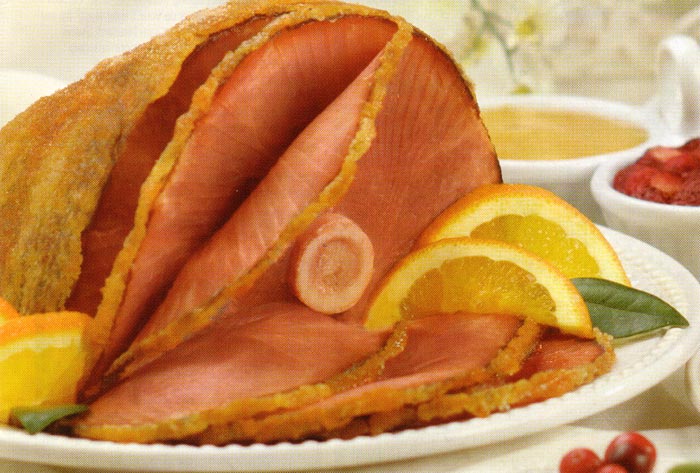
PORK FAT RULES!
Emeril Salutes America Schedule
Touring America's Food with Emeril Lagasse
In his nearly 10 years as a Food Network chef, Emeril Lagasse has been the flamboyant star of his own show, punctuating his cooking with exuberant "bams!" and packing auditoriums.
Food Network sent the superstar chef to eight cities around the nation where he spent hours with local chefs and in culinary hotspots. It'll all be dished up in an eight-part series airing on the Food Network beginning Sept. 29, running each night through Oct. 6.
The last entry in the series will be a salute to New York, where Lagasse will cruise around of Manhattan, cooking for an audience that includes fire and rescue personnel.
In an interview from New York, where he had just finished taping, Lagasse said the special comes at a time when people are increasingly turning to the old food classics. After Sept. 11, many people wanted to go back to their roots - eating lox and bagels in New York, for instance, or lobster or fried clams in Maine. It's making regional dishes all the more relevant.
"Chefs are taking the old classic dishes and modernizing them a little bit," he said. Ironically, Lagasse has done this for years - at first other chefs looked askance, "saying he's not sophisticated enough, or he's too rustic," he said.
Now, he said, "the connection's there."
Cooking up lobster rolls in Boston and fried catfish in Nashville, Tenn., Lagasse is saluting America by taking its culinary highlights and kicking it up a notch. He's spending more time in cities, meeting people and savoring local goodies, while still spending time in the kitchen.
It's an extension of work he's done before. Lagasse has brought his show to Orlando, Fla., Chicago and Las Vegas, but said he decided to salute America largely because of the connections the show has made with the old, the young, chefs and non-chefs and different ethnic groups.
"The last couple of years the show has sort of been wanting to go somewhere to sort of give back to a different audience and location," he said. He wanted to "go into the cities, really understand the people, understand the cultures, the ingredients, the food - then give that to people in an educational package."
The result is a series that mixes regional life with Lagasse's kitchen magic.
In Nashville, for example, Lagasse meets up with local legend Hazel Smith, whose delectable kitchen creations have made her a favorite among country stars. Lagasse also visits a barbecue joint, where he learns the secrets of good Tennessee barbecue. Then he brought their creations into his own kitchen, taking their beloved dishes and giving them his own twist in front of an exuberant audience. He also visits San Francisco, Boston, Houston, Seattle, Detroit and his hometown of New Orleans.
His salute comes at a time when we're relocating more than ever, and new immigration patterns are impacting regional cuisine. The change, Lagasse said, is for the better.
And in Nashville, he said, the city's economic boom has made the traditional pot-cooking menu a little more diverse. The change, he said, added more layers of Southern barbecue cooking and ethnic layers as well. "Now you have more ingredients because people want more," he said. "It's fascinating."
But it's also seen increasingly across the country. Even as cities stick to their traditional cuisine, they're adding new ingredients and new twists. And they've got more competition, too. "I think in every city you can probably get a decent Japanese meal," he said. "And a few years ago, you couldn't."
-- From the Scripps Howard News Service
PORK RECIPES BY EMERIL LAGASSE



MUSLIMS ARE STUCK IN 7TH CENTURY ARABIAN IGNORANCE!